
Woven Vinyl Upholstery for Furniture
Request a quote →Sample book and A4 swatches available — Request a swatch kit · stock items carry no MOQ
Woven vinyl upholstery in vinyl-coated PET yarn: woven texture, vinyl behaviour. For contract and residential furniture. It covers office chairs, restaurant banquettes, benches, headboards and sofas.
Specifications
| Property | Specification |
|---|---|
| Material | vinyl-coated PET yarns (woven vinyl) |
| Surface | 1.0 mm woven vinyl |
| Construction | Woven, linen and canvas textures |
| Surface use | Contract and residential seating: task and lounge chairs, banquettes and booth backs, bench runs, sofas and headboards built as furniture |
| Stain & water resistance | Stain and water resistant; wipes clean with a damp cloth |
| Comfort | Soft enough to sit on, durable enough for high-frequency use |
| Colour fastness | Tested to BS EN ISO 105-B02 and BS EN ISO 105-B04 (reports TÜV SÜD 70.404.18.21948.01-00, SGS SHIN1707041322MR and SGS HZ1293415/TX) |
| Width | 200 cm ±1% |
| Roll length | 15–25 m per roll |
| Weight | 550–850 gsm (average), covering the fabric alone and the version on a non-woven or 1 mm foam backing |
| Backing | The same backing as the wallcovering line: PET non-woven or a 1 mm PVC foam backing; the fabric is also supplied bare, for direct application |
| Outdoor suitability | Yes, used on outdoor furniture and poolside seating; the yarn is UV-stabilised |
| Face composition | — |
| Backing composition | — |
| Product standard | EN 15102:2007+A1:2011 · DoP No. 20220813 · Certificate of Conformity No. 157 (Dedal) · see Certifications |
Specifications are taken from the official specification sheet for this product line. Items shown with a dash are quoted per project; ask us for the current figure.

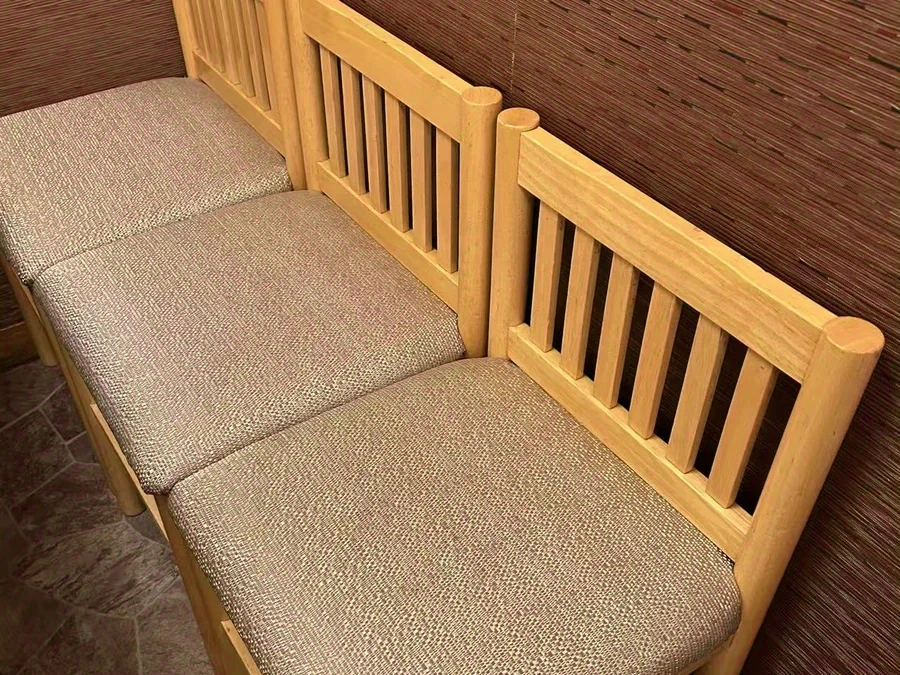
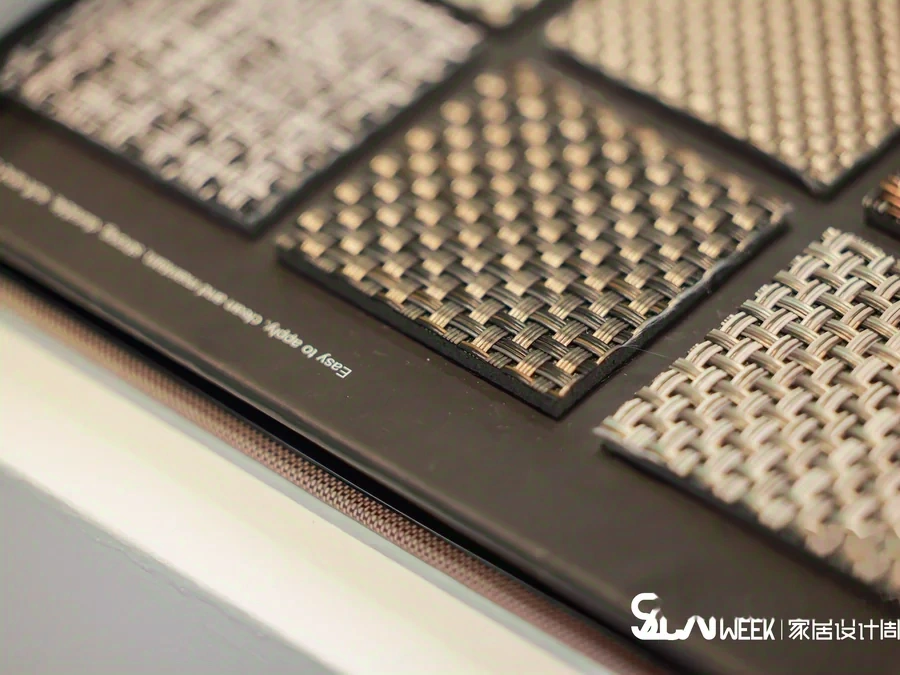
Width, seams and cutting
Seating is cut from a 200 cm roll, which is what lets a sofa seat or a banquette run come out in one piece instead of two halves joined down the middle of the seat. On a chair the seam is the part that carries load, so the choice matters: sewn for a tailored line, or HF-welded for a flat join with no stitch line on long bench runs and booth backs.
The face weighs 550–850 gsm depending on the backing, and it is woven rather than coated, so it turns a bullnose edge and a curved booth back where a paper-backed laminate would split. Cutting is ordinary upholstery work — a standard blade or a hot knife — and the cut edge does not fray, so no overlocking is needed and a replacement cover can be cut on site.
| Property | Value |
|---|---|
| Width | 200 cm |
| Seams | Sewn, or HF-welded for a flat seam with no stitch line |
| Abrasion | Martindale ISO 12947-2, over 20,000 rubs |
| Formaldehyde | EN 717-2, E1: 0.122 mg/m³h |
Where this surface works
- Office and task seating Contract fabric for task chairs, waiting-hall seating and breakout sofas.
- Restaurant, bar and café seating Banquettes and booth backs that take daily service and a wipe-down between covers.
- Bench runs and built-in seating Continuous runs in hotel lobbies, retail and changing rooms, without a join mid-run.
- Sofas and loose furniture Lounge chairs, sofas and ottomans for hotel and residential interiors.
- Headboards built as furniture Bed heads stitched or welded to a frame, rather than bonded to a wall.
- Outdoor furniture Patio and poolside seating on a UV-stabilised yarn, rated Grade 4–5 for light ageing.
Where is woven vinyl upholstery used?
Woven vinyl upholstery is specified where seating has to look like cloth and survive contract use: hotel lobbies, restaurant banquettes and booth backs, office breakout seating, waiting rooms, clinic chairs and the loose furniture on a retail floor. It is bought either by the furniture maker who builds the frames or by the specifier who has them made, and the reason it wins over a coated fabric is the face itself — a weave, not a print, so the pattern cannot rub off. The fabric runs 200 cm wide at 550–850 gsm and tests over 20,000 Martindale rubs, which is the line between contract and domestic seating.
What this surface does well
- Abrasion for seating Over 20,000 Martindale rubs (ISO 12947-2) — the figure contract seating is specified against.
- Wipe-clean between covers Spills sit on the face and lift off with a damp cloth, which is why it survives food service.
- Holds its line Skew and bow under 1% (EN 427), so a cut cover or cushion panel keeps its shape.
- Sewn or welded Both seam types are supported; welding gives the flat join that long bench runs need.
- Soft to sit on A weave, not a slick PVC film, so it does not feel like sitting on plastic.
- A backing for the job Bare for the upholsterer’s own foam, 1 mm PVC foam for veneering, PET non-woven where the piece meets a board.
What do the contract tests show?
Four numbers decide whether a fabric belongs on contract seating: abrasion, stability and fastness. Abrasion is over 20,000 rubs to ISO 12947-2:1998, which puts it on the contract side of the line rather than the domestic one. Skew and bow is under 1% to EN 427, so covers keep their line after cutting. Colour fastness is above 6 on the blue wool scale (BS EN ISO 105-B02) and rubbing is 4/5 wet and dry (BS EN ISO 105-X12) — the two figures a seating specifier normally asks for first.
Tested performance, with the methods behind it
Values below are taken from the official texlyweave® upholstery specification and data sheet; for seating the rows that carry the specification are abrasion, skew and bow, and fastness. Certificate No. 157 and the test data on file are on the Certifications page.
| Characteristic | Test method | Result |
|---|---|---|
| Skew and bow | EN 427 | < 1% |
| Abrasion (Martindale) | ISO 12947-2:1998 + Cor.1:2002 | > 20,000 rubs |
| Fungus resistance | ASTM G21-13 | Grade 0 |
| Light ageing (UV exposure) | ISO 4892-3:2016 Cycle 1, UVA-340, 1,000 h | Grade 4–5 |
| Colour fastness to light | BS EN ISO 105-B02:2014 | > 6 (blue wool scale) · TÜV SÜD 70.404.18.21948.01-00 |
| Colour fastness to rubbing | BS EN ISO 105-X12:2016 | Wet 4/5, dry 4/5 · SGS HZ1293415/TX |
| Pentachlorophenol (PCP) | CEN/TS 14494 | Not detected |
| Formaldehyde emission | EN 717-2 | E1: 0.122 mg/m³·h |
| Release of formaldehyde | EN 15102:2007+A1:2011 | E1: 3.5 mg/kg |
| Heavy metals and specific elements | — | Pass |
| Release of vinyl chloride monomer | — | 0.12 mg/kg |
| Phthalates (DEHP, DBP, BBP, DIBP) | REACH Annex XVII, entries 51 & 52, (EU) 2018/2005 | Pass |
| REACH | REACH Regulation, 211 substances | Pass |
| RoHS | EU RoHS Directive 2015/863 | Pass |
| AZO | ISO 14362-1:2017 | Pass |
| Materials in contact with foodstuffs | EN 1186: Part 3 | Pass |
| Proposition 65 | US California Proposition 65 — lead / cadmium / phthalate | Not detected |
Indicative values from production testing; the report of record travels with each delivery.
Methods, standards and the reports behind these figures: Techniques →
What matters on site
- One weave, wall and furniture Specify the same colourway for the wall and the seating, so a scheme reads as one material rather than two.
- Backing before you cut Bare for the upholsterer’s own foam, 1 mm PVC foam for veneered frames, PET non-woven where the piece meets a board.
- Seam plan first Decide sewn or welded before cutting: welding wants a flat run, sewing follows a curve and a piped edge.
- Outdoors UV-stabilised yarn, Grade 4–5 for light ageing; bring loose cushions in during long spells of rain.
What decides how the finished piece looks?
Three things: the backing, the seam and the direction the weave is cut. Cut every piece the same way up, or the colour reads differently across a curve — the same effect as brushing velvet the wrong way, and the first thing a buyer notices on a banquette.
Everyday maintenance
- Routine Vacuum with a soft brush and wipe with a damp cloth. No washing, no dry cleaning, no specialist products.
- Spills Blot rather than rub, so nothing is worked into the weave.
- Food, drink and ink A mild soap solution, then rinse with clean water and blot dry.
- Disinfectants Where a clinic or care setting needs one, check it against the cleaning list on Techniques first — a few aggressive products dull the face.
How is upholstery cleaned?
The routine on seating is a vacuum with a soft brush and a damp cloth. A spill on a chair should never turn into a reupholstery job: the weave holds the pattern, so nothing lifts off with the stain.
Full cleaning schedules, chemicals and spot guidance for this line: Techniques →
Custom and special orders
- Three backings PET non-woven, 1 mm PVC foam, or bare fabric for direct application.
- Wall to floor in one colourway The same woven vinyl runs through the wallcovering, flooring and upholstery lines, so a scheme can be matched across all three.
- Colourways See the collections in this product line for the colourways available.
How to order
- A4 swatches Available to qualified distributors, specifiers and designers; samples are free of charge, with the courier at your cost (freight collect).
- Project quantities Send us the colourways, the metreage and where the fabric is going and we will quote against production.
- Design service If you are working to a client scheme, tell us the look and we will suggest the closest weave.
Upholstery: questions we get asked
Is woven vinyl upholstery comfortable to sit on?
Yes. The weave is soft to the touch while standing up to frequent use, which is why it is specified for contract seating.
Can it be used outdoors?
Yes. The yarn is UV-stabilised and the fabric is rated Grade 4–5 for light ageing (ISO 4892-3, UVA-340, 1,000 h), so patio and poolside furniture is fine. Bring loose cushions in during long spells of rain.
How do I clean it?
Wipe with a damp cloth. For anything stubborn, use a mild soap solution and rinse with clean water.
Will it stand up to contract use?
Abrasion is over 20,000 rubs (Martindale, ISO 12947-2), skew and bow stay under 1%, and colour fastness is above 6 on the blue wool scale — the three figures that decide a seating specification.
Will it crack where the cushion folds?
A woven face does not have a printed or coated skin to split, which is why it turns a bullnose edge and a curved booth back. What you see after years of use is the weave flattening in the seat area, not the pattern lifting off.
Can I weld it instead of sewing?
Yes. HF welding gives a flat seam with no stitch line, which is what long bench runs and booth backs are usually built with. Sewn seams suit a tailored, piped or curved edge. Decide before cutting — the two want different seam allowances.
Can the same fabric go on walls as well?
Yes, and the wall version is specified as its own line: wall upholstery. Same face, different backing and fixing method.
Which backing should I specify?
PET non-woven for wall application, a 1 mm PVC foam backing for furniture veneering and soft-wall work, or no backing where the bare fabric goes on directly.
How do I get samples?
A4 swatches are available to qualified distributors and specifiers; samples are free of charge, with the courier at your cost (freight collect). Tell us which collections you are working with and we will send the closest matches.
Browse woven vinyl collections by weave
Specifying upholstery? The guide covers tensile, tearing, burst and Martindale results, sewing or HF welding, and the documents to request: read the guide →
Buying for resale rather than specifying? · Become a distributor · OEM and private label.