Boats and RVs
Motorhomes, camper conversions and motor yachts

A moving interior asks for three things a building floor is not asked for: colour that holds in strong light, a surface that does not soak when water stands on it, and a weight the fit-out budget can carry. Cabin soles are cut to the deck shape and welded where they are walked in bare feet; entry mats with a PVC foam backing take the wet traffic first; bulkheads and cabin walls take the same weave bonded to a panel. Certificates under IMO FTP Code we do not hold, and CE marking to EN 14041 applies to land-based fit-outs, so tell us early which regime the vessel is surveyed under. Woven vinyl for boats and RVs · Application note (PDF)
Hospitality
Hotels, resorts and restaurants Application note (PDF)
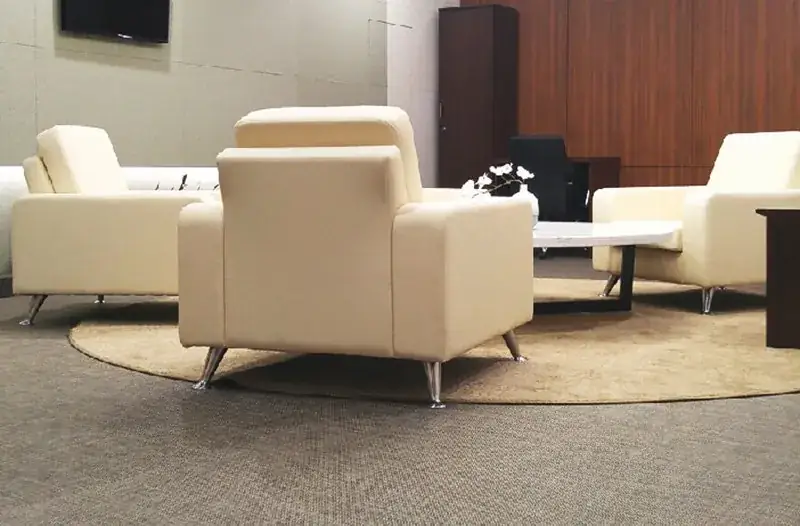
Hotel interiors are judged on how they look and measured on how they wear. Guest floors take suitcase wheels and trolley traffic, corridors take room-service carts, and lobbies take whatever the entrance hands them. Woven vinyl wall to wall flooring carries a 1.0 mm woven face on a 3.0 mm PVC foam backing, 4 mm in total at 2,400 gsm, and it mops clean without wax or specialist treatment, so a floor can be brought back between turns without closing the corridor. Wallcovering in the same weave carries the colour story up the wall. In corridors and meeting rooms, acoustic modular carpet tiles at 3.20 to 3.50 mm carry a vinyl, fibreglass and acoustic felt backing, which is where impact noise is dealt with; the figure we hold, ΔLw 21 dB to BS EN ISO 10140-3, comes from the wall to wall construction, and the tile build is expected to measure at least as well. All three carry EN 13501-1 Cfl-s1 and CE marking under EN 14041 or EN 15102. Wall to wall flooring
Corporate offices
Offices, coworking and meeting rooms
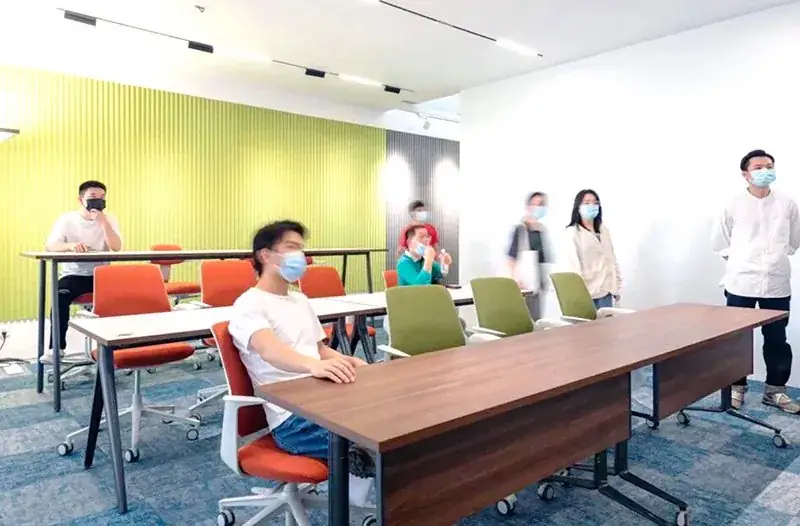
An office floor has to survive five days a week of castor traffic, coffee, and furniture moved without warning, and it has to look deliberate on the day a client walks in. Woven vinyl wall to wall flooring keeps a textile face over a resilient backing: 1.0 mm woven vinyl on 3.0 mm PVC foam, 4 mm total and 2,400 gsm, supplied in 200 cm rolls and cold-welded so a long run has no joints for soil to collect. Vacuum it daily, mop it when something spills; there is no stripping, sealing or waxing cycle to schedule. Where sound carries across an open-plan floor, acoustic modular carpet tiles take the edge off footfall and can be lifted a square at a time. At desk positions with continuous castors we still recommend protective chair mats. Fire performance is EN 13501-1 Cfl-s1 on a 4.1 mm construction. Surface detail
Retail & showrooms
Shops, showrooms and pop-ups
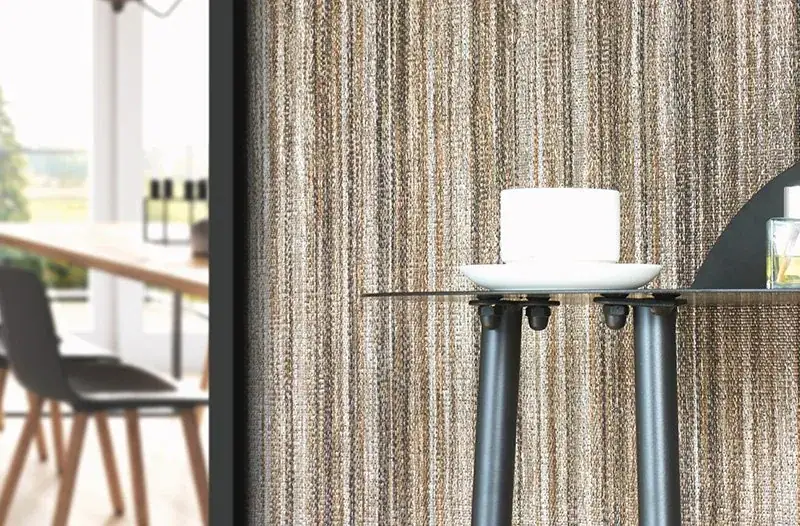
Retail interiors are rebuilt more often than they are worn out, so the surface has two jobs: it has to be cleanable during trading hours, and it has to be cheap to change when the brand changes. Woven vinyl does both. The face is a woven textile over a vinyl build, so a floor reads as fabric in the photographs a scheme generates, yet it takes a mop rather than an extraction machine. Because the 18 collections run across wallcovering, upholstery, wall to wall flooring and mats, a scheme can share one weave and one colour reference from floor to wall to seating, which is what keeps a fit-out coherent. Where a site is temporary, acoustic modular tiles can be lifted and re-used. Colour fastness is tested to BS EN ISO 105-B02 and B-04 at grade 4–4.5, so daylight does not bleach the weave unevenly. Collections
Healthcare
Hospitals, clinics and care spaces
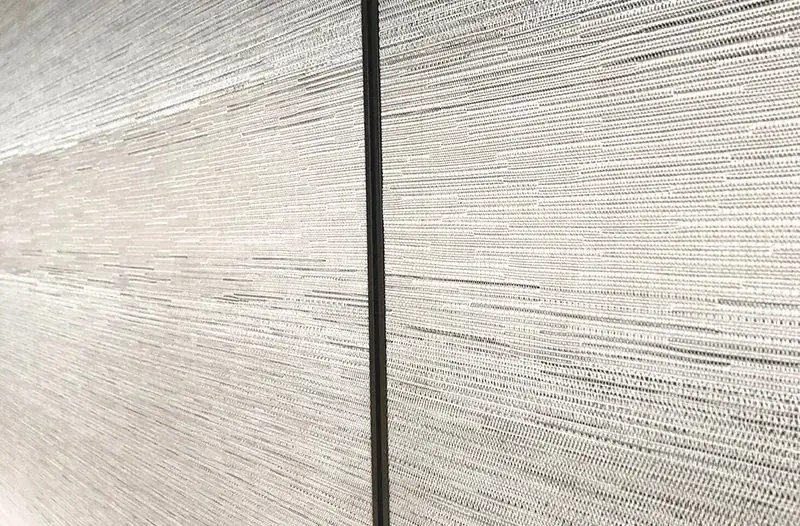
Healthcare interiors need three things at once: a surface that can be wiped with the products the cleaning contractor already uses, a surface that holds neither dust nor damp, and a floor that stays quiet under trolley traffic at night. Woven vinyl meets the first two by construction. The face is a woven vinyl, not a pile carpet, so it does not absorb liquid, and wallcovering in the same material can be wiped rather than replaced when a wall is marked. There is no pile to trap dust, which is the point in wards and waiting areas. For noise, acoustic modular carpet tiles with the 2.2 to 2.5 mm vinyl, glass-fibre and acoustic felt backing take the edge off impact sound; the figure we hold, ΔLw 21 dB to BS EN ISO 10140-3, comes from the wall to wall construction, and the tile build is expected to measure at least as well. Absorption is a separate figure: αw 0.05 to EN ISO 354 is the same reference, and for the sound inside a reverberant hall the ceiling and walls are where the budget goes. Documents
Education
Schools, colleges and training rooms
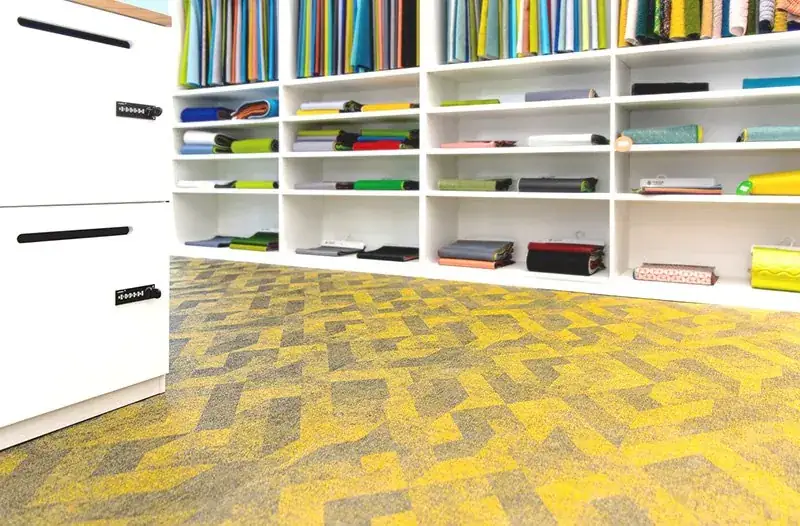
Schools and colleges put a floor through more per square metre than most commercial buildings: 200 children a day, chairs dragged rather than lifted, and a cleaning team that arrives after everyone has gone home. The specification that survives this is one where maintenance is a mop rather than a programme. Woven vinyl wall to wall flooring has a 1.0 mm woven face on a 3.0 mm PVC foam backing, 4 mm total at 2,400 gsm, with no pile and no wax requirement: scuffs come off with a damp pad, and there is no stripping and sealing cycle to fit into the holidays. For libraries and teaching rooms where sound matters, acoustic modular carpet tiles at 3.20 to 3.50 mm reduce impact noise and can be replaced a tile at a time after damage. Wallcovering in the same weave handles corridor walls. Fire: EN 13501-1 Cfl-s1. Schools guide
Residential
Houses, apartments and show flats
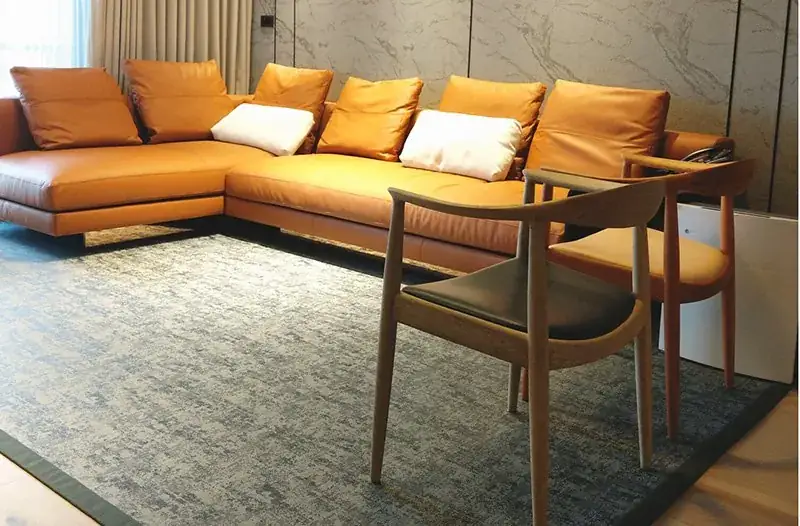
Residential projects use the same materials as contract ones, for a different reason: the surface has to feel like a textile underfoot and still survive a kitchen, a bathroom door and a dog. Woven vinyl wall to wall flooring is 4 mm in total, a 1.0 mm woven face over 3.0 mm PVC foam at 2,400 gsm, so it is warm underfoot and quiet under a chair, and it can be mopped rather than shampooed. Wallcovering in the same weave goes into hallways and bedrooms where a painted wall would show every mark. texlymat mats and runners arrive as finished rugs, ready to lay, in standard and custom sizes, which is how most residential interiors start. In flats and basements the vinyl build does not absorb water. Stock qualities carry no minimum order, so one apartment can be supplied from stock in 2 to 3 weeks. Mats and runners
Transport hubs
Airports, stations and public concourses
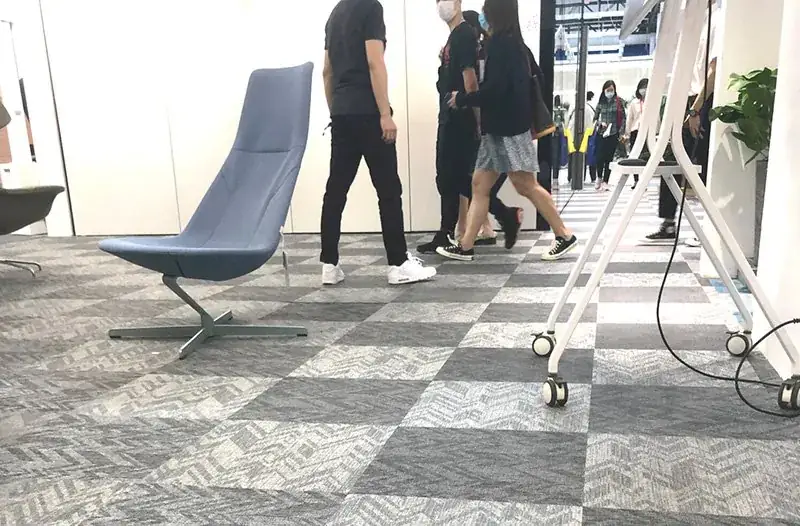
Transport interiors ask the least forgiving question of a floor: can it be cleaned while the building stays open, and will it still look like a floor after a year of continuous footfall? Woven vinyl answers with a continuous surface and cold-welded seams, so soil has nowhere to collect, and a face that takes a mop rather than an extraction clean, which moves cleaning into the hours a concourse is closed rather than into service. The construction is 1.0 mm woven vinyl over a 3.0 mm PVC foam backing, 4 mm total at 2,400 gsm, supplied in 200 cm rolls. On very high traffic we specify the tighter weaves and the darker grounds, and entrance matting at every door line so grit is stopped before it reaches the main floor. Fire performance is EN 13501-1 Cfl-s1. Weaves
Gyms, studios and sports venues
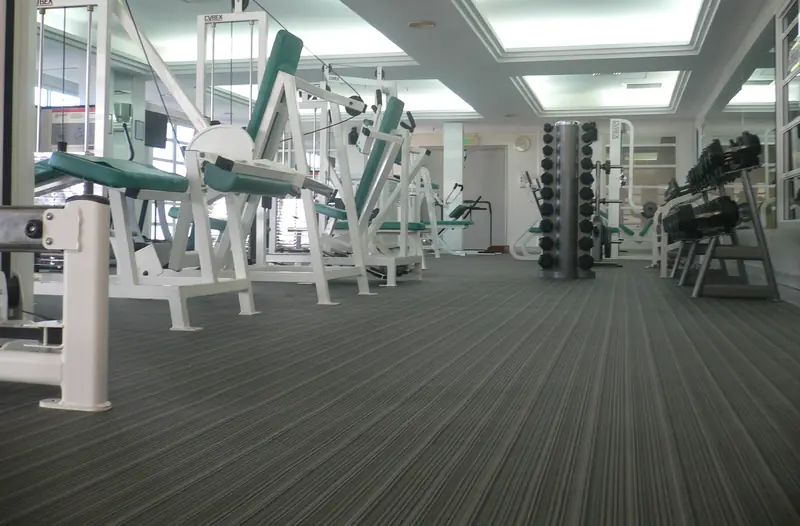
Sports floors are asked for two things at once: a surface that holds up where weight is concentrated, and a cleaning routine that keeps pace with sweat, chalk and tracked-in grit. Racks, machines and dumbbell stacks sit on feet rather than spreading load, so the specification is the tighter weave over a full vinyl backing, with pads under equipment feet. There is no pile to flatten or to hold moisture, so a mop is the whole maintenance programme. In studios, courtside rooms and lounges, acoustic modular carpet tiles at 3.20 to 3.50 mm carry the same vinyl, fibreglass and acoustic felt backing; the figure we hold, ΔLw 21 dB to BS EN ISO 10140-3, comes from the wall to wall construction, and the tile build is expected to measure at least as well. Entrance matting at door lines stops grit before it reaches the training floor. Fire performance is EN 13501-1 Cfl-s1. Wall to wall flooring
Seating and contract upholstery
Banquettes, booth backs, benches, headboards and task chairs

Seating is touched more often than it is looked at, so the face has to hold its colour and come clean where a hand rests. The same 1.0 mm woven vinyl face that goes on the floor is supplied bare, or on a PET non-woven or a 1 mm foam backing, which is what lets it be sewn or HF-welded into a shaped panel with a flat seam and no stitch line. Abrasion is tested to Martindale ISO 12947-2 at over 20,000 rubs, and colour fastness to BS EN ISO 105-B02 for light and B-04 for weathering, so a lobby window seat holds its colour as long as the floor under it. Care is a damp cloth: spills blot up rather than sink in, mild soap lifts marks, and there is no pile to shampoo or dry. Furniture upholstery · Walls and furniture · Project photographs
